

By Gift ChapiOdekina, Abuja
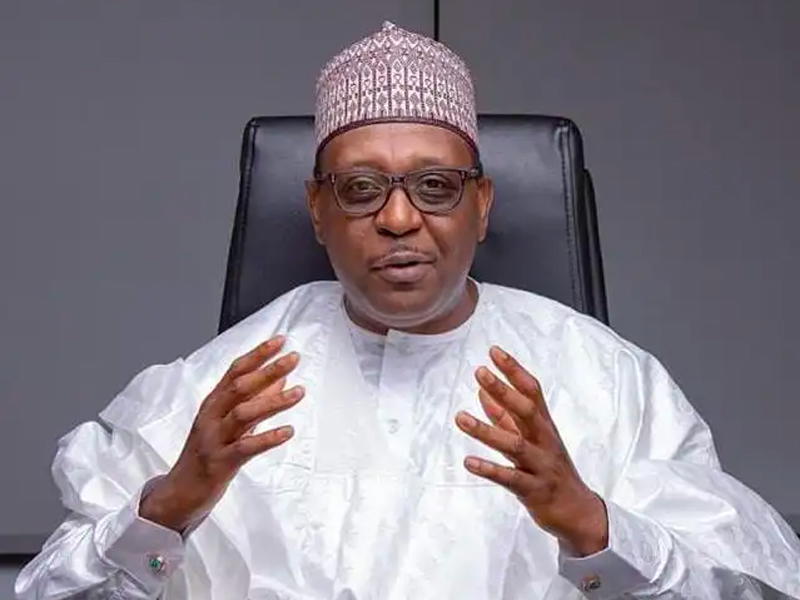
The Minister of Health, Prof. Mohammed Ali Pate, on Monday explained that the Federal Ministry of Health was unable to implement its 2025 capital budget after receiving only ₦36 million out of the ₦218 billion appropriated for the year.
Prof. Pate made this known during the 2026 budget defence before the House of Representatives Committee on Healthcare Services.
“Out of the ₦218 billion capital budget appropriated for the Ministry in 2025, only ₦36 million was released. With such a release, it was practically impossible to implement any meaningful capital project,” the minister told lawmakers.
He disclosed that while the Ministry’s personnel budget was fully released and utilised, the capital component suffered significant setbacks due to the bottom-up cash planning system operated by the Office of the Accountant-General of the Federation.
“Our personnel cost was released 100 per cent and fully expended. However, the capital budget was severely constrained by the cash planning process, which affected our ability to access funds for project execution,” Prof. Pate said.
The minister further explained that delays in the release of Nigeria’s counterpart funding also stalled access to donor-supported funds, compounding the Ministry’s inability to implement the 2025 capital budget.
“We were unable to draw down some counterpart and donor funds because Nigeria’s contributions were not released on time. This significantly stalled capital budget implementation,” he added.
Prof. Pate noted that the health sector operates within key policy frameworks, including Vision 20:2020, the Medium-Term National Development Plan (NDP) 2021–2025, and the National Strategic Health Development Plan (NSHDP) II.
According to him, the Nigerian Constitution and the National Health Act mandate government to guarantee the right to health for all Nigerians, while the 2016 National Health Policy provides the framework for translating these provisions into improved health outcomes.
“The overarching goal of the National Health Act and the Constitution is to guarantee the right to health for all Nigerians. The National Health Policy gives us the roadmap for achieving this,” he said.
He added that Universal Health Coverage remains central to government policy, particularly in strengthening primary healthcare across the country.
“The principles of Universal Health Coverage guide our efforts to deliver quality, efficient, equitable, accessible and affordable healthcare services to Nigerians, with special emphasis on primary healthcare,” Prof. Pate stated.
The minister disclosed that the Ministry’s 2026 budget proposal is derived from the 2026–2028 Medium-Term Expenditure Framework and Fiscal Strategy Paper (MTEF/FSP).
“The 2026 budget proposal was prepared using the Government Integrated Financial Management Information System (GIFMIS) and aligns with the National Development Plan 2021–2025, as well as the policy thrust of the Tinubu administration,” he said.
He explained that the proposal is anchored on the 2016 National Health Policy and guided by the Ministry’s Strategic Blueprint Initiatives aimed at achieving ministerial deliverables and advancing Universal Health Coverage.
In his response, the Chairman of the House Committee on Healthcare Services, Hon. Amos Gwamna Magaji, directed the Ministry to submit all relevant documentation on donor funds received and how they were utilised.
“The Committee will require full details of donor funds received by the Ministry and evidence of their utilisation to enable effective oversight,” Magaji said.
The post Why 2025 capital budget was not implemented — Minister Pate appeared first on Vanguard News.