

By Omeiza Ajayi
It was a rare spectacle of heritage meeting modernity on live television.
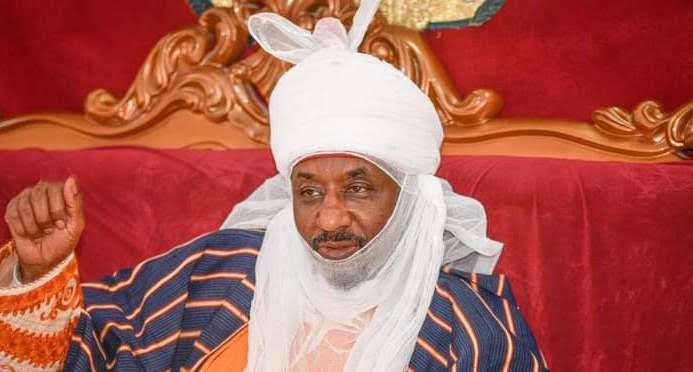
Clad in the rich, heavy regalia of their respective stools – the embroidered caps of the North and the coral beads of the South – three of Nigeria’s most influential traditional rulers On Wednesday sat side-by-side in the Lagos studio of Channels Television.
They were not there to discuss land disputes or title ceremonies; they were there to dismantle the very “mumbo jumbo” often used to justify the bruising and battering of women and children.
The Emir of Shonga, HRH Dr Haliru Ndanusa; the 14th Emir of Kano, HRH Muhammadu Sanusi II; and the Obi of Onitsha, HRM Igwe Nnaemeka Alfred Achebe, presented a united front following a high-level conference on gender-based violence (GBV) prevention.
Their message was surgical and uncompromising: culture is a shield for the vulnerable, not a license for the oppressor.
Myth of Static Culture
For decades, the “it is our culture” defense has been the last refuge for perpetrators of domestic violence and proponents of child marriage. However, Emir Sanusi II, a renowned economist and Islamic scholar, wasted no time in debunking what he termed the “myth of static culture.”
“Culture itself is dynamic,” Sanusi argued. He said what is acceptable in a culture at a particular time and place may be unacceptable in the same society at a different point in time.
He posited that in many patriarchal societies, those in power define culture to suit their interests, often at the expense of women.
Sanusi’s critique went deeper into the religious sphere, where he challenged those who appropriate faith to justify abuse. “If you tell me that domestic violence is part of your culture, show me where in the Quran or the Hadith it is allowed. The Prophet said those who beat their wives are the worst among you. How do you beat a woman and then go and sleep with her?”
From theatre to palace
Sitting to his right, the Emir of Shonga, a medical doctor, framed the crisis through the lens of productivity and public health.
For Dr. Ndanusa, gender-based violence is not just a moral failing but an economic and biological catastrophe.
“It is very urgent because you cannot continue to have over half of your population not being productive,” he noted.
He drew from his medical background to illustrate the physical toll of harmful traditions, recalling his days as a medical student seeing 13-year-olds bleeding from early marriage complications.
Ndanusa advocated for a shift in focus toward the “male child,” suggesting the creation of “boys’ clubs” to reorient young men away from toxic masculinity.
“We have to tell them that this power relation is causing harm. Some relish it, thinking it means masculinity, but we must orientation them for the future”, he stated.
Culture vs. Modernity
Representing the southern tradition, Igwe Achebe, a veteran of the oil and gas industry, spoke of culture as a “way of life” that must serve the people in the 21st century.
He shared how his traditional council in Onitsha has proactively used its authority to protect the “down and out,” including widows and the disabled.
The Obi shared a recent case in his kingdom where a man was fined and suspended from village activities for physically assaulting his sister-in-law.
“Violence and criminal acts must go to the police. We don’t condone that,” he insisted.
Perhaps most striking was Igwe Achebe’s embrace of technology to propagate tradition. In an age where many fear that digitization will erode heritage, the Obi revealed that he holds global town hall meetings via Zoom with subjects as far away as Indianapolis. “I can tell you this interview is being watched by my people all over the world. We don’t see a conflict between modernization and our tradition.”
At Table or on the Menu?
The dialogue took a poignant turn towards political representation. Sanusi II argued that the reason women’s issues are often sidelined is because women are missing from the rooms where decisions are made. “We’ve got 109 senators. How many women do we have? About four. If you are not on the table, you are on the menu,” he remarked, calling for constitutional affirmative action and designated “all-female” senatorial seats to break the cycle of patriarchal legislation.
The rulers acknowledged that while they lack the formal prosecutorial powers of the state, they hold a unique “final common pathway” of influence.
As custodians, their daughters go to university, and their palaces serve as models for the shift they wish to see.
As the conversation concluded, a sense of historic pivot remained. These are not rulers sequestered in ivory towers; they are PhD holders, medical doctors, and corporate titans who have returned to their roots to lead a new kind of revolution.
By standing together, the Emir of Shonga, the Emir of Kano and the Obi of Onitsha have sent a clear signal to the continent: the true dignity of a culture is measured by how it treats its most vulnerable members. The war against domestic abuse has found its most powerful allies – the very custodians of the heritage it once hid behind.
The post Sanusi, Achebe, Ndanusa declare war on GBV appeared first on Vanguard News.