

By Progress Godfrey
ABUJA — Nigeria’s ambition to build a $1 trillion economy by 2030 gained momentum at the second National Economic Council (NEC) Conference, where federal and state leaders adopted a coordinated roadmap anchored on grassroots development, fiscal reforms, domestic production, and human capital investment.
Held from February 9 to 10 at the Presidential Villa, Abuja, the conference produced far-reaching policy recommendations aimed at ensuring sustainable development with measurable outcomes.
The meeting, hosted by the NEC Secretariat under the Federal Ministry of Budget and Economic Planning, drew over 350 delegates, including Bola Ahmed Tinubu, Vice President Kashim Shettima, state governors, ministers, lawmakers, development partners, private sector leaders, and media stakeholders.
Tinubu: From Recovery to Transformation
Opening the conference, President Tinubu said Nigeria must move decisively from economic recovery to transformation, stressing that growth cannot be sustained without improved security and agricultural productivity.
“We will overcome this unacceptable terrorism and banditry. It’s not part of our culture. It’s foreign to us,” the President said, reaffirming his administration’s commitment to implementing the conference outcomes.
The theme, Delivering Inclusive Growth and Sustainable National Development: The Renewed Hope National Development Plan, framed discussions on policy coordination and subnational execution as drivers of accelerated growth.
At the centre of the resolutions was the endorsement of the Renewed Hope National Development Plan (2026–2030), the successor to the 2021–2025 blueprint.
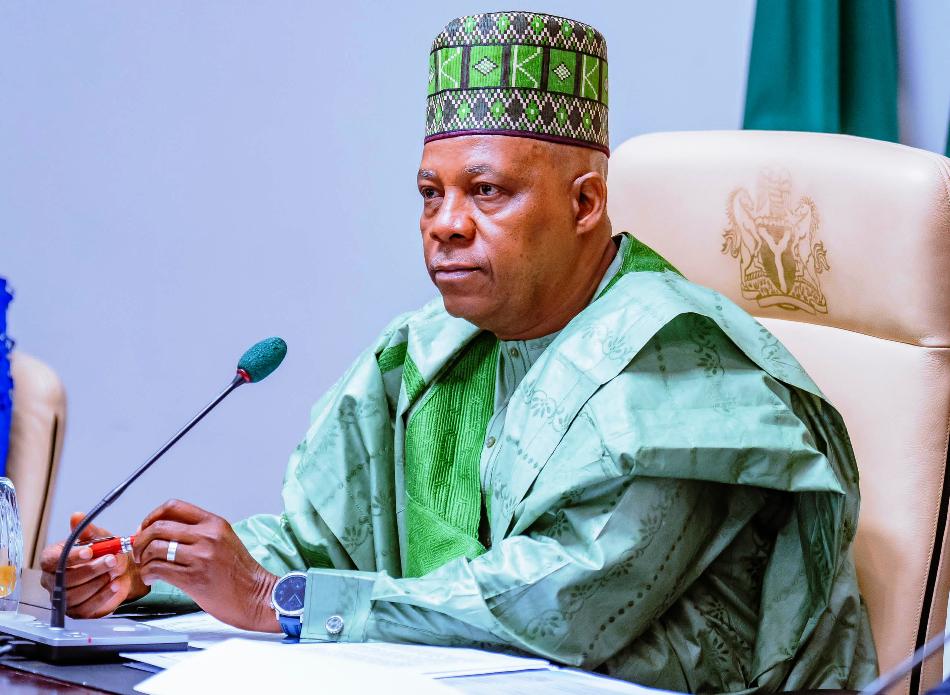
Vice President Shettima, who chaired the conference, described the plan as a turning point. “This is no ordinary transition. It is the bridge between lessons learnt and ambitions pursued,” he said, noting that the roadmap provides a practical pathway to achieving a $1 trillion economy.
Grassroots Development as Growth Engine
Minister of Budget and Economic Planning, Abubakar Atiku Bagudu, said the new plan would drive growth from the grassroots, beginning with Nigeria’s 8,809 wards.
“All rural development programmes, constituency projects, and donor-driven activities will be integrated to collectively fight poverty and attain a $1 trillion economy,” Bagudu said.
Delegates agreed that decentralised development would stimulate local enterprise, create jobs, reduce inequality, and improve accountability at subnational levels.
Fiscal Reforms and Tax Harmonisation
NEC urged states to harmonise tax laws to eliminate multiple taxation and improve competitiveness.
Chairman of the Presidential Fiscal Policy and Tax Reforms Committee, Taiwo Oyedele, disclosed that 12 states had passed harmonised tax laws, while others were at various stages of approval.
“Let us stop using consultants to collect taxes. It undermines our ability to do what is right,” Oyedele said.
The council also called for improved spending discipline, prioritisation of human capital and infrastructure, and constitutional amendments to strengthen fiscal federalism and tax administration across all tiers of government.
Human Capital, Security, and Domestic Production
The conference identified human capital development, security, and domestic production as critical enablers of long-term growth.
States were urged to increase per capita spending on education, healthcare, and youth employment, noting that Nigeria’s investment in social sectors lags behind peer economies.
On security, NEC emphasised stronger inter-agency coordination and non-kinetic approaches to addressing unemployment and poverty, identified as underlying drivers of insecurity.
The domestic production panel called for expanded concessional financing, secure production corridors, and closer federal-state collaboration to strengthen local value chains and boost exports.
World Bank Reaffirms Support
The World Bank reaffirmed its partnership with Nigeria, with renewed focus on domestic production and results-based financing.
Country Director for Nigeria, Mathew Verghis, said about two-thirds of the Bank’s $16 billion active portfolio is implemented at the state level, reflecting a growing partnership with subnational governments.
He added that the Bank is shifting from financing inputs to financing results and structuring projects to attract private capital in energy, broadband, and small business support.
Growth Targets and Caution
Minister of State for Finance, Doris Uzoka-Anite, said Nigeria must sustain at least 10 percent annual growth over the next decade to meet the 2030 target.
“The 2026 outlook shows progress, but acceleration must be engineered. The growth rate required to achieve a $1 trillion economy is at least 10 percent over 10 years,” she said.
Adding a cautionary note, Chukwuma Soludo said the target is achievable only if reforms are deepened and sustained, stressing that growth must be productivity-driven and anchored on structural reforms.
“A $1 trillion economy is possible, but it will not happen by wishful thinking. It requires difficult reforms, productivity-led growth, export expansion, and strong institutions,” Soludo said.
Looking Ahead
Delegates commended the Office of the Vice President and the Federal Ministry of Budget and Economic Planning for organising the conference.
The effectiveness of the NEC roadmap will be tested in the coming months as state governments align budgets, enact harmonised tax laws, and mobilise local economic activities.
For now, Nigeria’s $1 trillion vision has shifted from political slogan to a concrete policy agenda, with the nation’s development machinery mobilised toward one of its most ambitious economic pursuits in decades.
The post NEC unveils roadmap to achieve $1 trillion economy by 2030 appeared first on Vanguard News.