

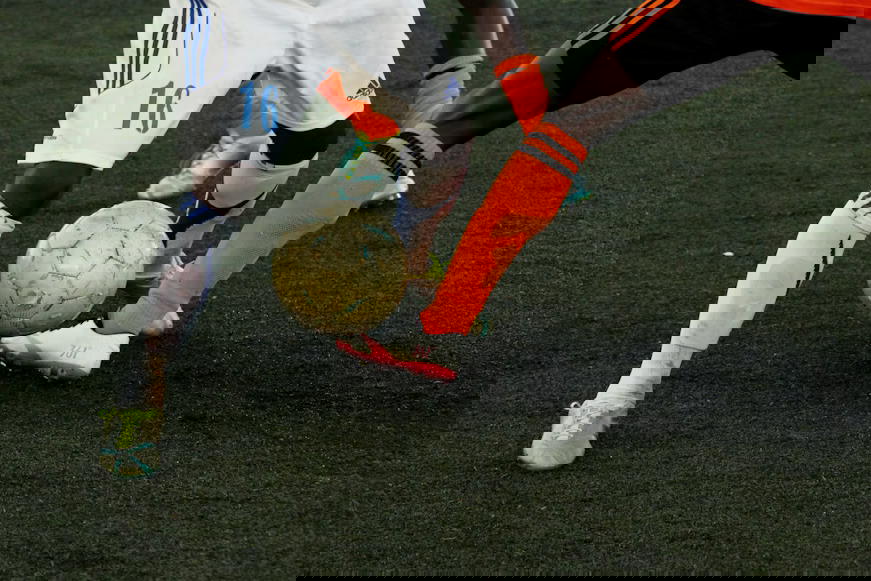
It is no secret that African athletes are some of the quickest and strongest in their respective sports and disciplines. Their natural talents make them great athletes, with the best of the best going on to set record breaking performances while competing at the highest level. In soccer, speed is not everything, but certain players have made a name for themselves for their incredible sprinting, pace, and agility, with those from Nigeria among the fastest right now.
The speed of Nigerian soccer players is often one of the first qualities noticed by fans, scouts, and opponents alike. From explosive wingers to rapid fullbacks, Nigerian footballers have built a reputation for natural quickness that translates into devastating counterattacks and recovery runs. Players like Victor Osimhen, Ahmed Musa, and Obafemi Martins have all been celebrated for their acceleration and top end pace at the highest levels of European football. With that in mind, who is the fastest player in the world born in Nigeria?
Fastest Nigerian Soccer Players Right Now
1. Bright Osayi Samuel
The 28 year old plays as a right back for Birmingham City in the English Championship. In EA Sports FC 26, he boasts an elite 93 pace rating, making him the fastest player of his country. He has 92 acceleration and 93 sprint speed, reflecting his explosive runs down the flank. This season, he has made 17 league appearances with Birmingham, providing defensive solidity and supporting attacks, although with no goals/assists yet. He is also a regular with the Nigerian national team.
2. Victor Osimhen
The best and most popular Nigerian star right now, the 27 year old is a striker for Galatasaray in Türkiye. In EA Sports FC 26, he has a 92 pace rating, known for his blistering speed and strength on the break. As of Feb 2026, Osimhen has scored 9 goals in 15 competitive matches across all competitions for Galatasaray this season, helping his side challenge for domestic honours. He is also a key figure for Nigeria with 51 caps and 35 goals. His stint with Napoli made him one of the most desired players in Europe.
3. Chidera Ejuke
Another young star (28) in his prime, he is a winger for Sevilla in Spain’s La Liga. While exact EA FC 26 pace isn’t widely published, he’s widely regarded as one of Nigeria’s quickest wide attackers thanks to his dribbling acceleration and direct running. In the 2025-26 campaign, Ejuke has made around 14 league appearances with at least 1 goal and several key dribbles and chance creating actions.
4. Henry Onyekuru
Onyekuru, like Osimhen, plays in Türkiye. He is a 28 year old winger for Gençlerbirliği whose speed is a core part of his game. With a PAC of 90 on EA FC 26, he is typically valued for his quick transitions and penetrating runs. He has so far played 8 games and has yet to contribute with goals and assists in the Super Lig.
5. Orji Okwonkwo
The striker is 28 years old and is currently on loan in Pescara from Bologna of Serie A in Italy. He has been on plenty of teams as a loanee for the last decade, with varying success, but enough performances and good production. The forward is known for his athleticism and bursts of speed operating between the lines. His EA FC 26 PAC rating is 90, and he is often deployed as a fast attacking outlet. He has regular appearances and goal contributions depending on his club’s league schedule.
6. Moses Simon
The 30 year old veteran plays as a winger and has the pace to stretch defenses. EA FC 26 considers him an 89 PAC player, more than enough to deal with any defense. Simon has been involved in the Nigeria squad this season and has recorded a few goals/assists with his club, Paris FC. He is noted for his creative running and quick bursts when transitioning forward.
7-10. Emerging Talent
Although not yet as popular or well known as some of their countrymen, the following players are very quick, and their pace alone is a great addition to any team they become a part of. Yira Sor is emerging in professional football with noted quickness as a forward/winger. Moses Usor is a young winger often highlighted for raw pace and dribbling threat, particularly in youth and lower division competition. Felix Agu and Philip Otele are both lesser known Nigerian players who are developing talents playing in lower leagues or youth setups.
Retired Speedsters of Nigeria
While the current roster of players looks promising, some of the fastest Nigerians have already said their goodbyes to the game. Their names live on in the collective mind of football fans as they continue to inspire younger generations as they watch they continue being involved in the game they love.
Obafemi Martins
Obafemi Martins is perhaps the Nigerian speed legend in football. During his prime (early to mid 2000s), he was known for explosive acceleration and top end sprinting that terrorized defenders in Serie A with Inter Milan and in the Premier League with Newcastle United. Velocity rankings and multiple sources suggest he clocked elite top speeds comparable to some of the fastest players of his era, with estimates around 35.1 km/h at peak performance. Martins often claimed publicly that he outran many speed icons of his generation, and his pace was a signature part of his game. It helped him score over 200 club goals and represent Nigeria 42 times internationally before retiring.
Tijani Babangida
Tijani Babangida was a winger in the 1990s and early 2000s known especially for his rapid bursts down the flank. While there is no exact top speed timing in mainstream data for him, Babangida’s pace left such a lasting impression that old Pro Evolution Soccer and fan communities frequently label him among the fastest players of his era (often jokingly at “near max” video game speed). His speed helped him become a regular contributor for the Super Eagles and at the club level, particularly with Ajax and in early continental competition, before retiring in 2004.
Pius Ikedia
Pius Ikedia, another winger active mainly in the late 1990s and 2000s, just like the previous two, was widely regarded by teammates and opponents as a really fast player. He played for clubs like Ajax and Groningen, and although there are no exact recorded top speed figures available, historical descriptions and YouTube videos consistently mention his standout pace and wing acceleration as defining traits, typical of the lightning quick wide players Nigeria produced in that generation and hopes to again.
Naturally Speedy and Physically Gifted
The quickness is often attributed to a combination of genetic predisposition, early exposure to physically demanding environments, and a football culture that emphasizes dynamic, open play. Many Nigerian players grow up playing on uneven surfaces, sandy pitches, or tight urban spaces, which can enhance agility, balance, and fast twitch muscle development. These informal environments demand constant sprinting, quick direction changes, and physical resilience. Biologically, speed relies heavily on fast twitch muscle fibers, and West African populations have frequently been studied for a higher prevalence of these muscle characteristics, which support explosive movements such as sprinting and jumping. While individual variation always matters more than nationality, the visible trend of explosive Nigerian attackers has reinforced the global perception of their natural pace and athleticism.
Furthermore, endurance and stamina are equally important components of Nigerian players’ athletic profile. Modern football requires repeated high intensity sprints over 90 minutes, and many Nigerian players thrive in this physically demanding style. Their stamina allows them to maintain pressing intensity, track back defensively, and still produce decisive bursts late in matches. This endurance is often cultivated through a combination of grassroots play, competitive school tournaments, and national youth competitions that prioritize physical robustness. Nigerian football culture tends to value both athletic dominance and technical skill, encouraging young players to develop cardiovascular endurance and muscular power from an early age. When players transition to structured academies or European clubs, they often refine these raw physical attributes with advanced sports science, nutrition, and conditioning programs.
Nigeria is Dominant in Other Fast Sports
The emphasis on speed and endurance in soccer mirrors Nigeria’s broader success in track and field, particularly in sprinting disciplines. The country has produced world class sprinters who have excelled on the global stage, such as Chioma Ajunwa, who won Olympic gold at the 1996 Summer Olympics, and Blessing Okagbare, a multiple time Olympic and World Championship finalist in sprint and long jump events. The country has also fielded strong relay teams and produced standout performers in the 100m, 200m, and long jump. The same physiological traits that benefit sprinters, mainly explosive starts, high stride frequency, and powerful hip extension, are valuable in football for short bursts and breakaway runs.
While football requires a different endurance profile than pure sprinting, combining aerobic capacity with repeated anaerobic efforts, the athletic foundation is similar. Nigeria’s broader athletic culture, where the natural sprinting talent is celebrated and developed, reinforces the idea that speed is both admired and systematically cultivated. In essence, the quickness seen in Nigerian soccer players is not an isolated phenomenon but part of a wider sporting pattern and an athletic heritage of a whole nation. It reflects a combination of natural physical attributes, environmental conditioning, cultural emphasis on athleticism, and a national track and field tradition that continues to highlight Nigeria’s capacity for speed and power on the world stage. With more technology and science behind it, it will only be more pronounced in the future.
Nigerian Soccer FAQs
Why is Nigeria’s national team called the Super Eagles?
Nigeria’s senior men’s national team is nicknamed the Super Eagles as a symbol of strength, pride, and national identity. The eagle appears on Nigeria’s coat of arms and represents power and resilience. The team was previously known as the “Green Eagles” before adopting the “Super Eagles” name in 1988.
How successful is Nigeria in the Africa Cup of Nations (AFCON)?
Nigeria is one of Africa’s most successful teams in the Africa Cup of Nations. The Super Eagles have won the tournament three times (1980, 1994, and 2013), have finished as runners up 5 times, and have 9 bronze medals, a tally that makes them one of the continent’s most consistent performers.
What was Nigeria’s greatest FIFA World Cup performance?
Nigeria’s best performances at the FIFA World Cup came in 1994, 1998, and 2014, when they reached the Round of 16. The 1994 squad is especially remembered for its flair and confidence, marking Nigeria’s debut at the World Cup in the United States. Sadly, they did not qualify for the upcoming 2026 World Cup or the previous one in 2022.
Why is the 1996 Olympic gold medal so important in Nigerian soccer history?
Nigeria made history at the 1996 Summer Olympics by winning the men’s football gold medal. The team, often called the “Dream Team,” defeated Brazil in the semifinals and Argentina in the final, becoming the first African nation to win Olympic gold in football.
Who are some of Nigeria’s most iconic footballers?
Nigeria has produced many legends, including:
Nwankwo Kanu: Olympic gold medalist and twotime African Player of the Year.
Jay-Jay Okocha: Known for his dazzling skills and creativity.
Rashidi Yekini: Nigeria’s all time top scorer and 1994 AFCON hero.
Mikel John Obi: Former Chelsea midfielder and national team captain.
Who is Nigeria’s biggest football rival?
Nigeria’s fiercest rivalry is with Ghana. Matches between the two nations, often called the “Jollof Derby”, are highly competitive and emotionally charged. They reflect both sporting and cultural rivalry between the neighboring countries.
What is the Nigeria Professional Football League (NPFL)?
The top domestic league in the country is the Nigeria Professional Football League. It serves as the highest level of club football in Nigeria and has produced many players who later moved on to dominate in the top European leagues.
Which Nigerian club is the most successful in African competitions?
Enyimba FC is Nigeria’s most successful club internationally. They won the CAF Champions League twice (2003 and 2004), becoming one of the dominant African clubs of that era.
Why do so many Nigerian players play in Europe?
Many Nigerian players move to European leagues for better infrastructure, higher salaries, and stronger competition. Countries like England, Spain, Italy, and Belgium have been common destinations. This global exposure has helped Nigeria remain competitive internationally while showcasing its football talent worldwide.
The post Fastest Nigerian Soccer Players in 2026: Dominating with Pace and Stamina appeared first on Vanguard News.